

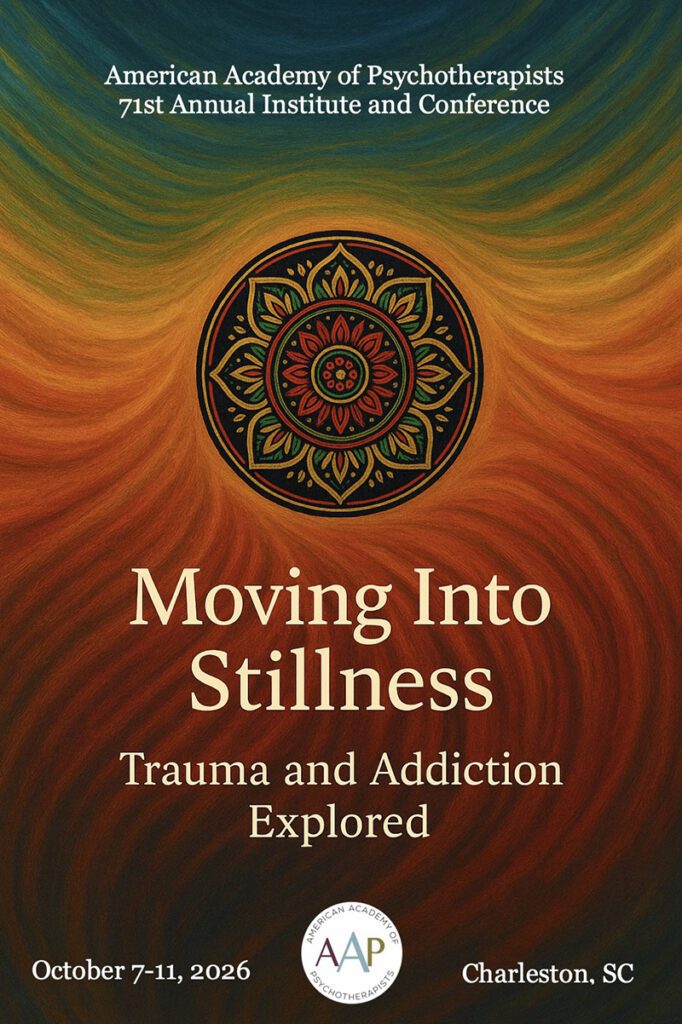
Moving Into Stillness: Trauma And Addiction Explored
October 7 – 11, 2026
Charleston, SC
In the midst of our fast-moving, overstimulated world, stillness can feel counter intuitive. Yet it is within this stillness that we discover new ways of seeing, hearing, and understanding both ourselves and others. Just as music arises in the spaces between the notes, so too does a sacred truth.
Moving Into Stillness: Trauma and Addiction Explored. This year’s theme invites us to pause together as a community of healers, seekers, and survivors, in hopes of discovering a deeper and more compassionate understanding of trauma, addiction, and the human condition.
As we gather, may stillness become our teacher. May it soften our judgments, open our hearts, and expand our understanding of the relationship between trauma and addiction—and how the process of healing becomes possible. May our collective stillness deepen both our personal journeys and our professional callings, allowing us to more effectively serve those entrusted to our care.
“We use all kinds of ways to escape- all addictions stem from the moment we meet our edge and we just can’t stand it. We feel we have to soften it, pad it with something and we become addicted to whatever seems to ease the pain.” – Pema Chodron, When Things Fall Apart
Ask not, “Why the addiction?” But rather, “Why the pain?” – Dr. Gabor Mate , In the Realm of Hungry Ghosts, Close Encounters with Addiction
Learning Objectives
At the end of this conference, participants will be able:
- To define and articulate the meaning of addiction that is humanizing and compassionate, moving beyond traditional definitions and conceptualizations about substance use only.
- To identify specific factors about the relationship between trauma and addiction that our clients face.
- To describe and discuss cultural traumas in our country and the world that both our clients and ourselves as clinicians experience in our offices and in broader society.
- To name three examples of ethical considerations in doing trauma and addiction work with clients.
- To identify and describe the impact of trauma and addiction on marginalized communities.
- To describe and utilize the identifying principles of recovery as returning to stillness and one’s true nature and authenticity
- To identify strategies for helping clients lean into stillness (I.e. meditation, movement, art, writing, etc.) to improve and cope with trauma activation in the body.
